Damp Proofing & Damp Surveys in Colchester
Practical investigation and treatment for damp, moisture and timber problems in homes across Colchester and surrounding Essex. Start by understanding what is causing the problem — then decide what actually needs doing.
Find the source before treating the symptom.


Common damp problems
Start with what you can actually see
Most people come to us with a symptom rather than a diagnosis. Here is where those symptoms usually lead — and what is commonly assumed but not always true.
Rising Damp
A tide-mark, blown plaster or salting low down on a ground floor wall.
Often assumed, less often confirmed. Ground levels and leaks look much the same.
Read morePenetrating Damp
Patches that darken after rain, sometimes at high level or mid-wall.
Usually traced to pointing, render, gutters, flashings or seals.
Read moreCondensation & Mould
Black spotting in corners, on reveals and behind furniture.
A moisture, ventilation and cold-surface problem rather than a wall defect.
Read moreDry Rot
Cube-like cracking in timber, strand growth and a mushroom-like smell.
Can travel beyond the wet timber, so extent matters as much as presence.
Read moreWet Rot
Soft, darkened timber next to a leak or a persistently damp wall.
Stays where the water is. Usually a contained repair once the source stops.
Read moreTimber Decay
Springy floors, decaying skirtings, old insect exit holes.
Frequently historic rather than active — worth confirming before treating.
Read moreNot all damp is the same
Similar marks on a wall can have completely different causes
A single damp patch tells you where moisture is arriving — not where it came from. That is why we look at the building as a whole before recommending anything.
- A plumbing or heating leak below a floor
- Rainwater entering through defective pointing or render
- Condensation forming on a cold internal surface
- Blocked, split or overflowing gutters and downpipes
- A damp-proof course bridged by render, plaster or debris
- Ground, paths or patios raised above the damp-proof course
- Damaged brickwork, eroded mortar or failed seals
- Insufficient ventilation to rooms or subfloor voids
- Genuine rising damp where no effective barrier exists


Correct diagnosis matters because the wrong treatment wastes money and may not solve the underlying problem. We will not tell you what is wrong with your wall from a photograph — but we will tell you honestly when a problem looks like a small repair rather than a large one.
Not sure what you’re looking at?
The Colchester Homeowner’s Damp Check Guide
Damp patches, mould and peeling plaster can have very different causes. Our free homeowner guide shows you what to look for inside and outside the property, what patterns are useful to record, and when it may be worth getting specialist help.
No signup. No email required.
Free PDF · 10 pages
Damp surveys
An investigation, not a sales visit
A damp survey establishes what is most likely causing moisture in a building, so any decision — to repair, to treat, or to leave alone for now — is an informed one.
Homeowner investigations
Damp that keeps returning after redecoration usually means the cause has never been addressed. A survey steps back from the symptom.
Recurring or seasonal damp
Problems that come back each winter, or after heavy rain, behave in patterns. Those patterns are useful evidence.
Buying a property
If you have noticed damp at a viewing, understanding its likely scale before you commit is far more useful than guesswork.
Selling a property
Damp raised during a sale can stall negotiations. Knowing the cause lets you explain it or address it, calmly.
Reports mentioning moisture
Valuation and HomeBuyer reports often note readings and advise a further specialist inspection. We look at what is actually happening.
Whether more investigation helps
Sometimes the honest answer is that no further specialist work is needed. We will tell you when that is the case.
Damp proofing & treatment
Treatment follows diagnosis, and stays proportionate
There is no single solution that suits every property. What is right for a 1970s cavity-walled semi in Highwoods is not necessarily right for a solid-walled cottage near the town centre.


- Damp-proof course solutions where a genuine failure is identified
- Localised plaster removal and reinstatement where plaster has broken down
- External repairs — pointing, render, seals, gutters and downpipes
- Moisture management and ventilation improvements
- Waterproofing or tanking to below-ground walls where appropriate
- Timber treatment or repair where moisture has affected structural wood
Where a smaller repair will resolve the problem, that is what we will recommend. Where more extensive work is genuinely needed, we will explain why before anything begins.
Damp proofing in ColchesterOlder properties in Colchester
Buildings behave according to how they were built
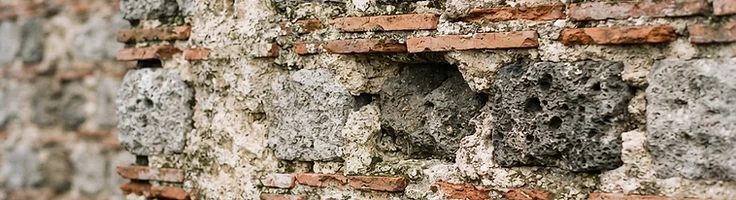
Colchester has been building and rebuilding itself for two thousand years, and its housing reflects that. Not every property here is historic — a great many are perfectly ordinary post-war and modern homes — but the town does have a substantial stock of Victorian terraces, older cottages and period buildings around the historic streets and the Dutch Quarter.
Solid-wall construction, traditional brickwork and lime-based mortars and plasters were designed to absorb and release moisture. Later alterations — cement renders, gypsum plasters, impermeable paints, raised paths and sealed-up ventilation — can interrupt that behaviour and produce damp where there was none before.
Understanding which of these applies to your property is why we look at construction and alteration history, not just moisture readings.


Buying or selling a property
Damp raised during a sale rarely needs to derail it
It usually needs explaining. We look at the building and set out what we think is happening, in language you can pass on to the other side. This is practical information about the property, not legal or valuation advice.
A valuation mentions damp
Mortgage valuations frequently note possible damp and recommend a specialist inspection. It is usually a note of caution rather than a conclusion.
A HomeBuyer report flags moisture
Reports often record elevated readings without establishing a cause. That cause is what determines whether the issue is minor or significant.
Damp found before completion
Discovering damp mid-purchase is unsettling. Understanding the likely source gives you something concrete to work with.
Sellers wanting clarity first
Knowing what is actually happening before negotiations start is generally better than reacting to someone else’s interpretation.
How it works
Understand first. Treat second.
A straightforward sequence, designed so that you are never paying for work before anyone knows why the wall is wet.
- 01
Tell us what you are seeing
A short description, a postcode and photographs if you have them.
- 02
Discuss the property and symptoms
The age and construction of the building, and when the problem appears.
- 03
Survey or inspection where appropriate
Inside and out, with moisture readings where they are useful.
- 04
Identify the likely source
Explained plainly, with the reasoning behind it.
- 05
Recommend proportionate next steps
Including where the answer is a small repair, or nothing at all yet.
- 06
Treatment if required
Carried out once the cause is understood and addressed.
Areas we cover
Colchester and the surrounding villages
We work across Colchester itself and the nearby parts of Essex, on everything from town-centre period properties to modern estates and village cottages.
- Colchester
- Lexden
- Stanway
- Wivenhoe
- Marks Tey
- West Bergholt
- Mile End
- Highwoods
- Prettygate
- Surrounding villages
Why Camulodunum Preservation
The company to call when you want to know why
Our name comes from Colchester’s Roman origins, and preservation is the point of what we do — keeping buildings sound rather than treating them for the sake of it.
Specialist focus
We work on moisture and timber in buildings. Not extensions, not roofs, not kitchens.
Diagnosis before treatment
The first question is always why a wall is damp, not what to sell for it.
A preservation-minded approach
Repair what needs repairing, keep what is sound, and avoid unnecessary disruption.
Older and modern buildings
Solid walls and lime plasters behave differently to modern cavity construction. Both are assessed on their own terms.
Clear explanations
You should leave a conversation with us understanding your building better than before.
Local to Colchester
The housing stock here is varied, and local familiarity genuinely helps.
FAQ
Questions we are asked most often
Seeing damp or mould in your property?
You do not need to work out the cause yourself. Tell us what you are seeing and we can help you understand the next sensible step.